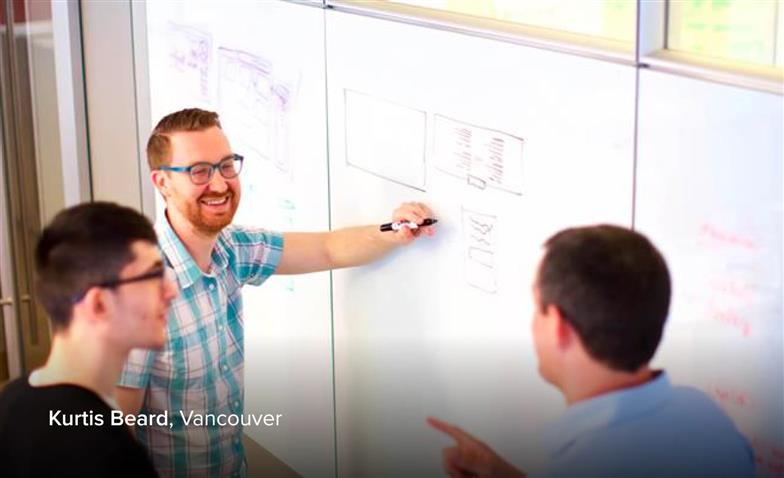

At our most recent executive roundtable events in Toronto and Vancouver, we started each session by acknowledging the current state of the world/economy/polycrisis and checking in with participants by asking two questions: first (and most importantly), how are you feeling? And second, what are the challenges and issues that are most top of mind in your organization and would benefit from peer perspectives.
In both sessions, an underlying theme emerged: organizations (and people) have a choice in this moment to find green shoots of opportunity…and there is lots of opportunity out there if you’re looking for it.
Discovering growth amid uncertainty
While many sectors of the Canadian economy aren’t flourishing (manufacturing, real estate, forestry, wholesale trade and transportation), other parts of our economic picture contain growth. In fact, around the table, the opinion was that despite the uncertainty – or perhaps, even because of it – new opportunities are emerging that wouldn’t have otherwise been visible. Taking advantage of these opportunities requires special organizational capabilities, such as:
- Developing the ability to decide, act or respond quickly to changing conditions
- Incorporating a constant and short-cycled rhythm of probing, sensing and adapting or reprioritizing based on learnings
- Embracing a willingness to rethink, walk away from or press pause on commitments that no longer make sense in today’s environment or create net-new, previously unplanned investments based on “what’s true now”
Being receptive to opportunity can take many forms: seeking reformation through mergers; introducing new tools or technologies to change how work gets done; or reshaping an over-indexed workforce. This didn’t necessarily mean layoffs or reductions; rather, it could mean reforming the workforce with a new focus, skillset and/or priorities.
This ability to respond to growth opportunities does come with challenges:
- There is often culture tension in letting go of “how we used to do things” to work differently and rise to meet rapidly evolving strategies.
- It can take a higher-than-expected investment to align leaders, teams and employees around a new vision, strategy, values, beliefs and performance expectations amid constant change.
- Mergers (especially in the financial institution space) while intentional, may be continuous, compounding the pressure on orchestrating a cohesive culture, consolidated leadership and integrated processes and operations.
Developing new skills for navigating complexity
Given the rapid pace of change combined with the complexity of problems organizations are facing, participants recognized that the old school methods for change rollout no longer apply. To be successful with today’s change – characterized as complex, agile and non-linear – organizations need to focus more on creating the conditions for change to happen (vs. developing a perfect plan), with new skills built at scale across teams and lines of business.
To be successful at complex change, organizations need new skills to:
- Frame the right problems (not just focus on the symptoms)
- Bring in many voices and perspectives, convene dialogue and lead teams through sensemaking
- Understand the root causes of why change needs to happen
- Bring people together to imagine the future and be part of the way forward
- Bring leaders and managers along as a key lever in sharing the rationale of change while modelling and reinforcing its importance
- Help leaders recognize their own need to change (it’s not just about telling other people to do it – they have to evolve too!)
- Embed a belief in (and safety with) experimentation and learning
- Show evidence of progress and momentum towards new ways of working versus relying on traditional KPIs or scores
This work is not easy. Participants shared that complex change involves engaging all levels of the organization. It’s not just HR or one passionate sponsor who “owns” complex systems like culture. Everyone recognized that it’s important to build momentum by coaching early adopters and engaging change champions with skills to uncover stories and share evidence of people doing things the new way. They agreed that change is more successful with an appreciative mindset, where “what you notice, changes” vs. focusing on where traction is stuck.
Discovering new leaders from within
Organizations are grappling with rapidly changing demographics due to a workforce that is aging, stretched and retiring and a sudden slowdown in immigration. Roundtable participants were acutely aware that after decades of talent abundance, talent scarcity lies ahead in the not-too-distant future. People recognized that their best path to leadership succession and sustainable performance exists by retaining, cultivating and growing their current people. However, there is a gap between the skills those potential leaders possess today and what the organization will need.
Participants shared their suggestions on how to bridge the leadership gap and grow their future leaders:
- Draw a clear path between today’s organization, its future vision and performance ambition and the skills that leaders will need to meet those challenges.
- Instill belief in future leaders that the organization believes in them, will prioritize and support them and recognizes that they can evolve and learn the necessary leadership skills, even if they aren’t close yet.
- Offer more than canned leadership training or courses; instead, focus on creating a mentoring and coaching environment that encourages people to learn by doing, apply new skills and gain experience through both success and safe failure.
- Demonstrate the value of choosing a leadership development path when candidates may be reluctant to take on the responsibility.
- Support current executives to recognize that by making space for others to grow, they create an opportunity for their own development, even if they are at the peak of their careers.
Shaping new behaviours with executive leaders
If there are any cracks in the dynamic of an executive team, this time of uncertainty will cleave them wide open. These cracks can come in any form but are often expressed in old ways of thinking and acting that limit the organization’s ability to respond to today’s dynamic influences. In fact, several participants shared that their executive teams must look inward and recognize that only by first changing themselves and demonstrating new ways of working will they be able see and inspire what levels of performance are possible from the rest of the organization. In other words, they set the ceiling for the organization with their own beliefs and behaviours. Others won’t change unless they do first!
Participants were candid about what makes an executive team function well and responsively in this era of uncertainty – it’s more than just talk; it involves true development in many ways. Leaders need to:
- Align on what performance means to the organization and reward progress towards these desired behaviours. This is a powerful lever for an executive team to deliver on its organizational vision and strategy.
- Gain insight about each leader’s individual readiness to develop and grow continuously to become what the world and business needs of them. Every leader is in a different place in their development. While some leaders are more able than others to recognize their own capabilities and limitations, it’s hard to gain this perspective without external support.
- Understand that many executive teams function purely along operational lines. To work effectively, executive teams need to transition from a group of operational leaders to an interdependent team that functions at an enterprise, holistic altitude.
- Understand what behaviours are rewarded at the executive level and how they impact outcomes across the organization. For example, if risk avoidance is highly valued and rewarded, over-indexing on avoiding risk could mean that innovation is stifled or other opportunities are missed.
- To create a strong executive fabric, be intentional about diverse team composition – i.e., tenure with the organization, past executive experience, experiential background. A healthy mix of perspectives paired with space for new voices (as above) helps executive teams respond to uncertainty.
Leaning into opportunity
It was encouraging to hear such a strong theme of opportunity shine through our roundtable discussions. Leaders in the discussions were leaning into what’s being asked of them on behalf of their organizations: to notice and nurture both people and opportunities and to see this time as a chance to develop and evolve their own skills and capabilities for navigating complexity.